Engineered wood flooring is a multi-layer wood board featuring a real hardwood top layer bonded to a stable core. First launched commercially in the mid-20th century, it was developed to overcome the limitations of solid timber in modern, climate-controlled buildings.
Unlike solid wood flooring (a single piece of timber throughout) or laminate flooring (a printed image on high density fibreboard), engineered wood is real wood you can see and touch, engineered for stability. The surface is genuine hardwood—oak, walnut, ash, or maple—while the layered construction beneath prevents the warping, cupping, and gapping that plagues traditional planks.
The benefits are straightforward: you get the natural look of timber, better resistance to movement than solid wood, often a more cost effective price point, easier installation options, and compatibility with underfloor heating systems. The rest of this article covers durability, construction, appearance, installation, maintenance, and where engineered flooring works best.
What Exactly Is Engineered Wood Flooring?
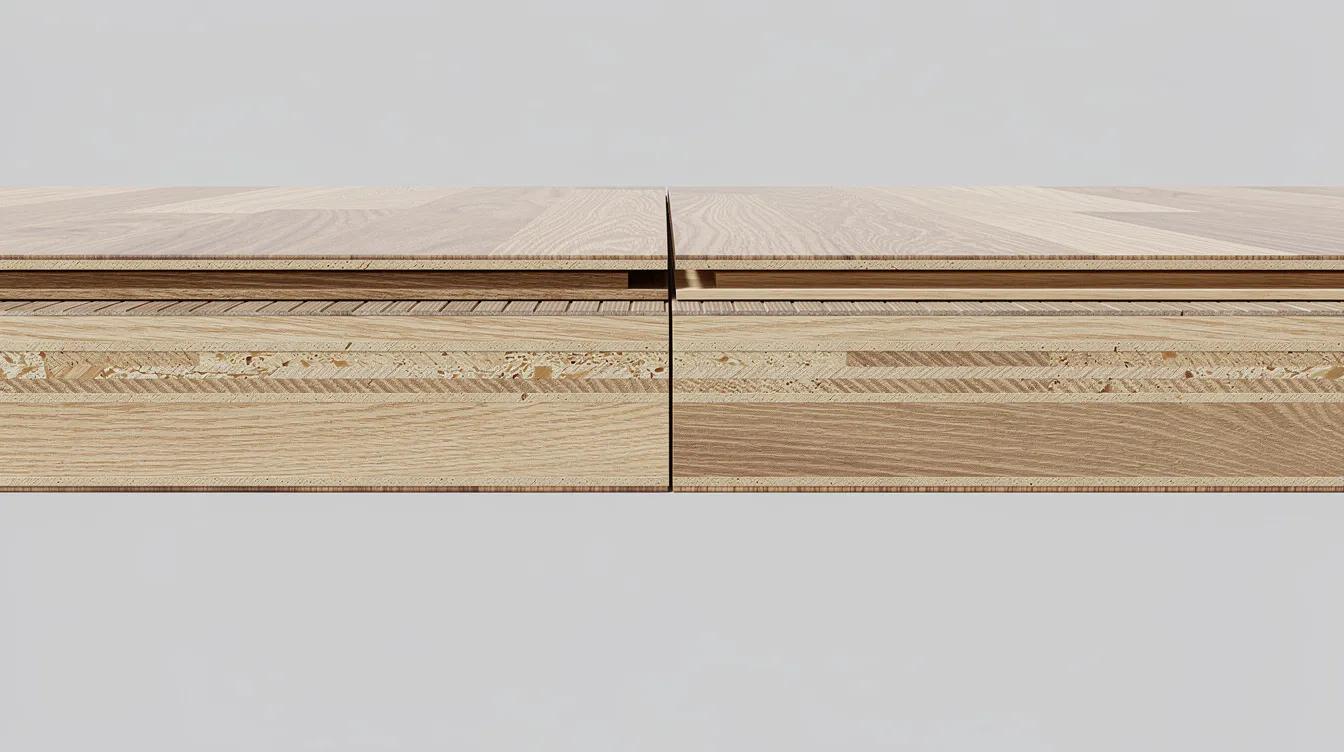
Engineered wood flooring combines multiple layers of materials into a single, stable board. Here’s what makes up the product:
-
Wear layer (top layer): A 2–6 mm thick hardwood layer of real wood, typically European oak, American walnut, ash, or maple. This hardwood layer is what you walk on and determines the floor’s appearance.
-
Core construction: Several layers of plywood, softwood strips, or HDF arranged with grains at alternating angles, creating a rigid core board with superior strength against moisture and temperature changes.
-
Backing layer: A stabilising bottom layer that balances the board and prevents warping.
-
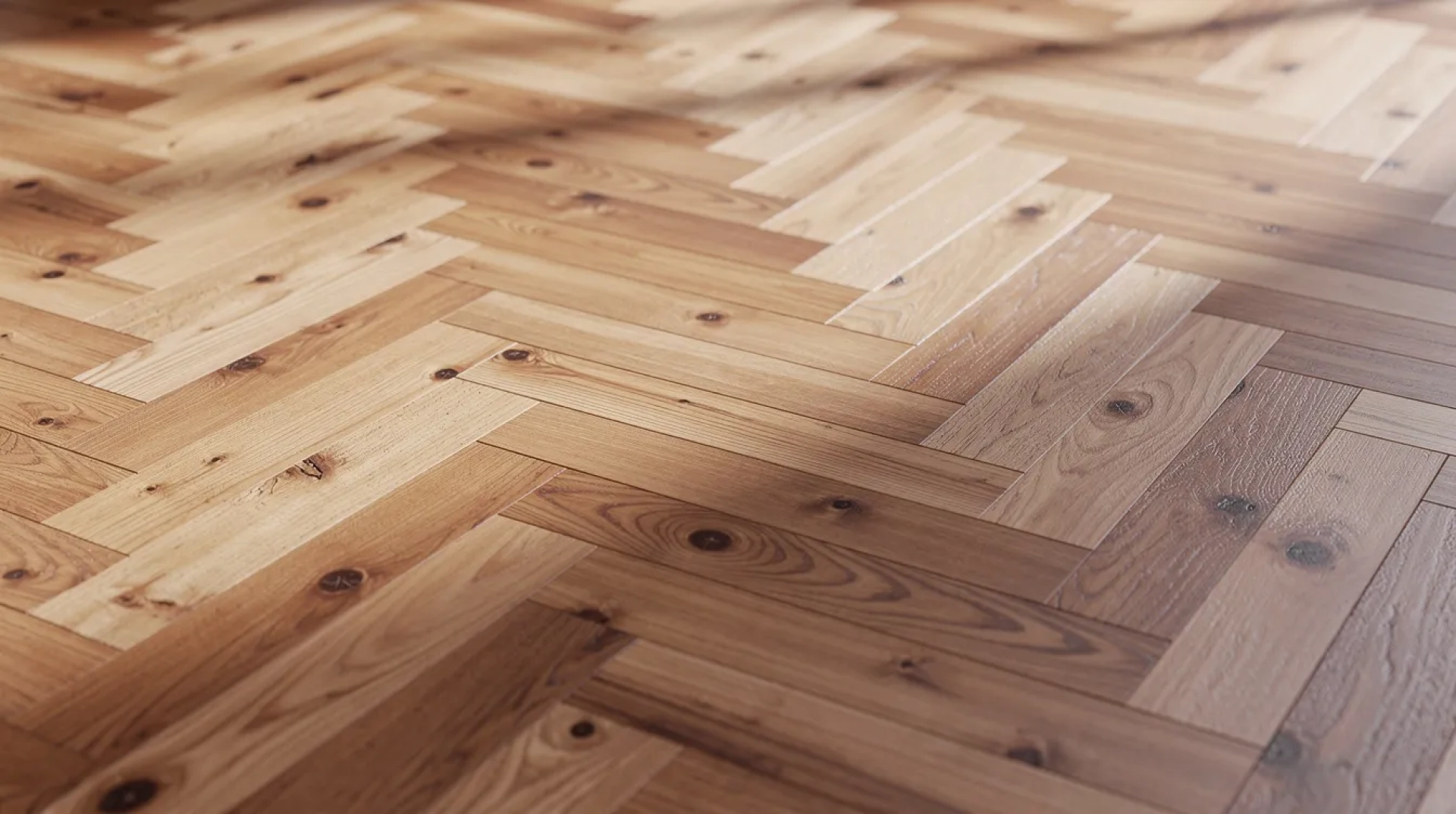
Overall thickness: Typical boards measure 12 mm, 14 mm, 18 mm, or 20 mm thick, with plank widths of 150–220 mm and lengths of 1,800–2,200 mm for UK and EU homes. Herringbone and chevron blocks are also available.
-
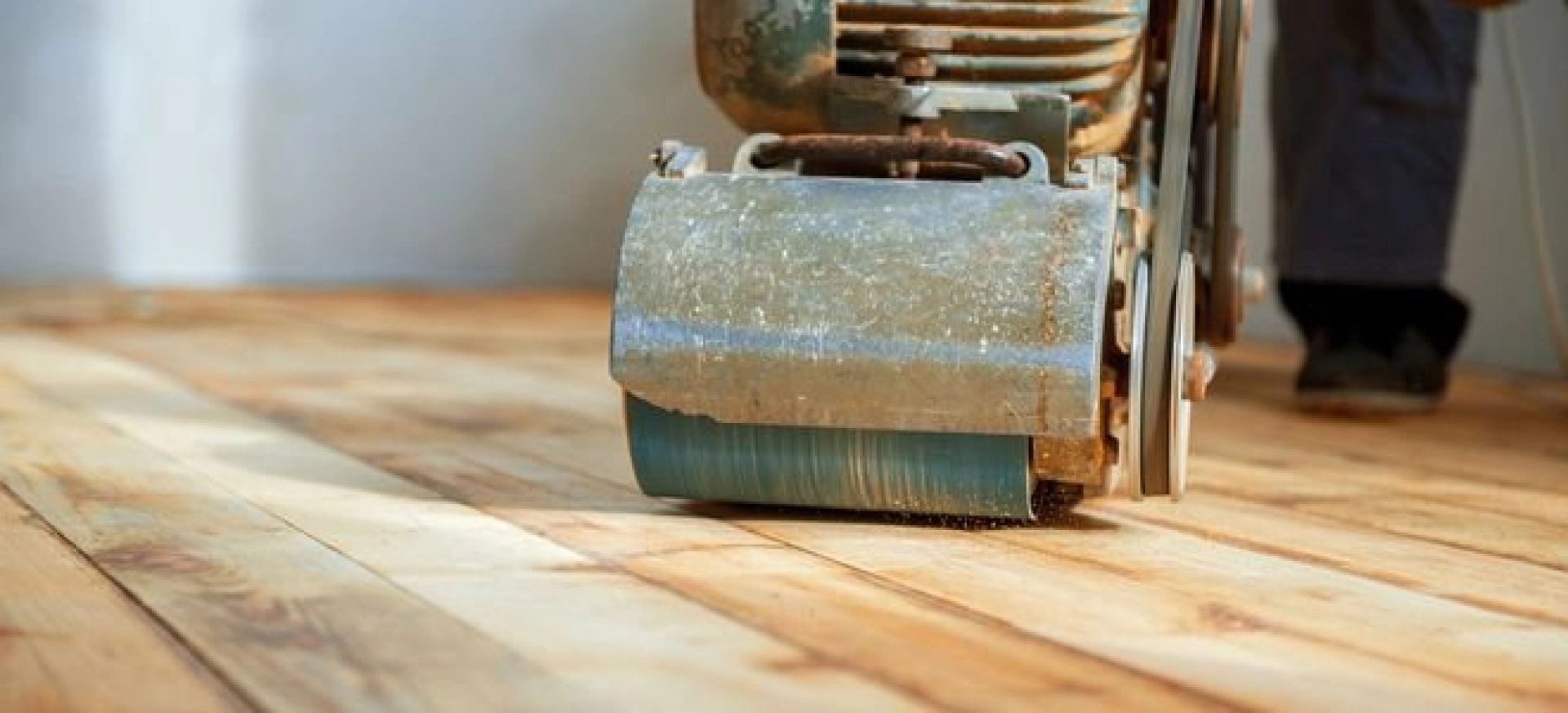
Refinishing potential: Because the top layer is real hardwood, engineered floors can be sanded and refinished one or more times, depending on wear layer thickness.
-
Factory finishing: Most boards arrive lacquered or with an oiled finish, though unfinished options exist for on-site staining in renovations.
Think of it as a carefully layered timber board designed to stay flatter and more stable than a single, solid plank.
How Engineered Wood Flooring Is Made
The manufacturing process combines precision engineering with traditional woodworking. Each step contributes to the finished product’s dimensional stability and durability.
-
Core fabrication: Three to twelve thin layers of plywood or softwood strips are arranged at 90° to each other, then bonded with high-strength adhesives under intense heat and pressure. This cross-grain construction is the scientific foundation of engineered wood’s stability.
-
Plank milling: Planks are precision-cut from the core board using computer-controlled machinery, then profiled with either tongue and groove or click-locking edges for seamless joinery.
-
Hardwood lamella creation: The top layer is sliced or sawn from timber logs. Sawn veneers tend to look closer to traditional solid boards and can reach 4–6 mm thickness.
-
Assembly and pressing: The hardwood lamella is bonded to the core and backing layer in a hydraulic press, creating a unified board.
-
Surface finishing: Boards are sanded flat, then finished with stains, UV-cured oils, hardwax oils, or multi-layer lacquers to create the final surface finish.
-
Why it works: The alternating grain directions distribute stresses evenly, reducing moisture-induced swelling by 50–70% compared to solid wood.
Durability and Stability of Engineered Wood Flooring
Engineered wood is designed to be dimensionally stable and long-lasting in real homes. The multi ply core structure makes it far more resistant to environmental changes than traditional timber.
-
Resistance to movement: The layered construction resists twisting, cupping, and gapping better than solid wood, making it suitable for centrally heated homes, flats with large windows, and rooms with fluctuating temperatures.
-
Lifespan by quality: Budget 3-layer boards with 2–3 mm wear layers typically last 15–25 years in moderate traffic homes. High-quality boards with 4–6 mm wear layers can last several decades and support multiple refinishing cycles.
-
Acclimatisation matters: Proper acclimatisation (48–72 hours in the room before fitting) is mandatory. Correct subfloor preparation and maintaining indoor humidity between 40–60% prevent issues.
-
Hardness varies by species: Impact resistance depends on species—oak’s Janka hardness rating of 1,200–1,360 far exceeds pine’s 380–500. A lacquered finish provides stronger abrasion resistance than oil.
-
Natural character: Although engineered wood is more forgiving than solid wood flooring, the natural wood surface will mark and age over time. Many homeowners see this as unique character rather than a flaw.
Installation Methods for Engineered Wood Flooring
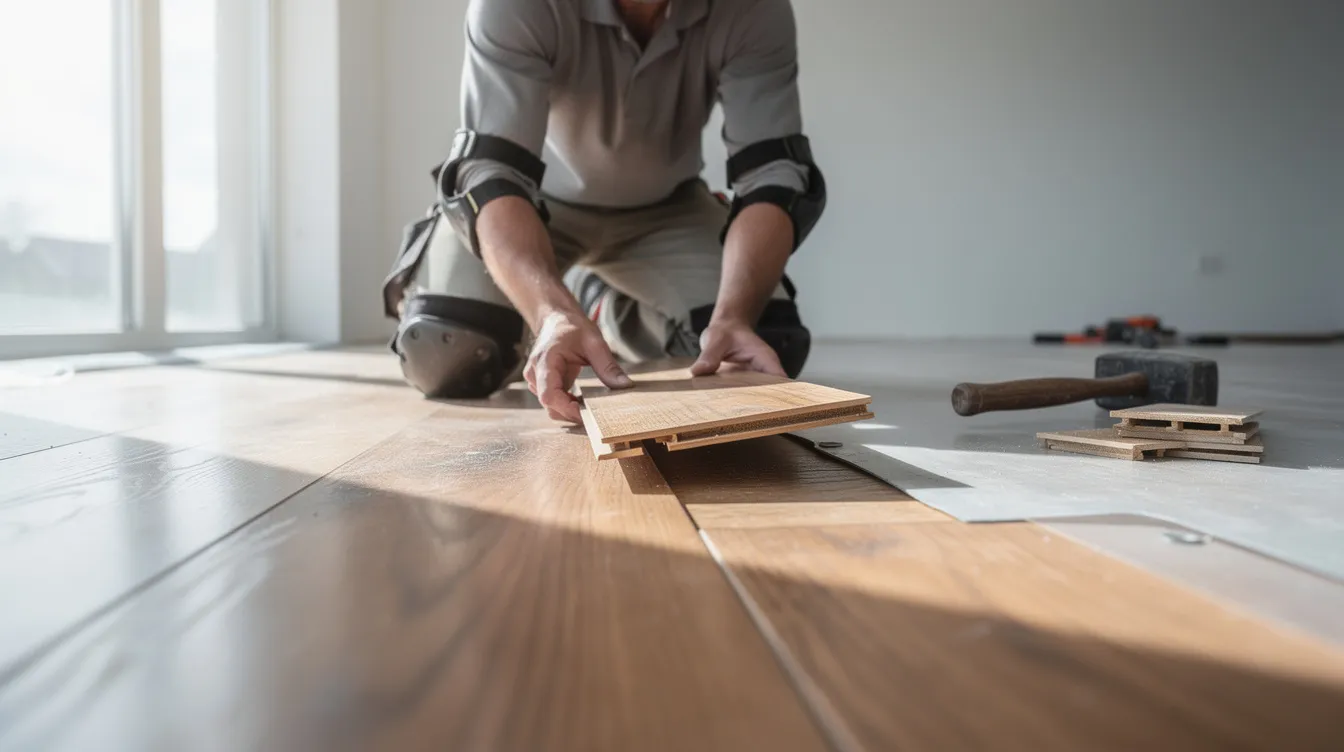
Engineered floors are designed for easier installation than traditional nail-down solid planks, often making them suitable for competent DIYers. The various types of installation methods suit different situations.
-
Click-lock floating: Boards with machined locking profiles angle and snap together without glue or nails. This method works over underlay on sound subfloors and allows for future removal if needed. Industry estimates suggest click systems reduce labour by 30–50% compared to nailing solid planks.
-
Glued floating: Tongue and groove boards are glued together at the joints and laid over underlay, creating a more solid feel while still floating above the subfloor.
-
Fully bonded: Boards are glued directly to a suitable subfloor for enhanced acoustics and a more stable, permanent installation.
-
Nail or screw fixing: Thicker engineered boards (18–20 mm) can be installed like traditional timber, fixed directly to joists or battens in renovation projects.
-
Subfloor requirements: The base must be flat, dry, and structurally sound. Concrete slabs require moisture testing (below 75% RH or 3lbs/1,000sqft/24hrs), and existing timber floors must be stable.
-
Underfloor heating compatibility: Manufacturers specify maximum allowed surface temperatures, typically around 26–27°C. Gradual commissioning prevents thermal shock.
The Look and Design Options of Engineered Wood Flooring
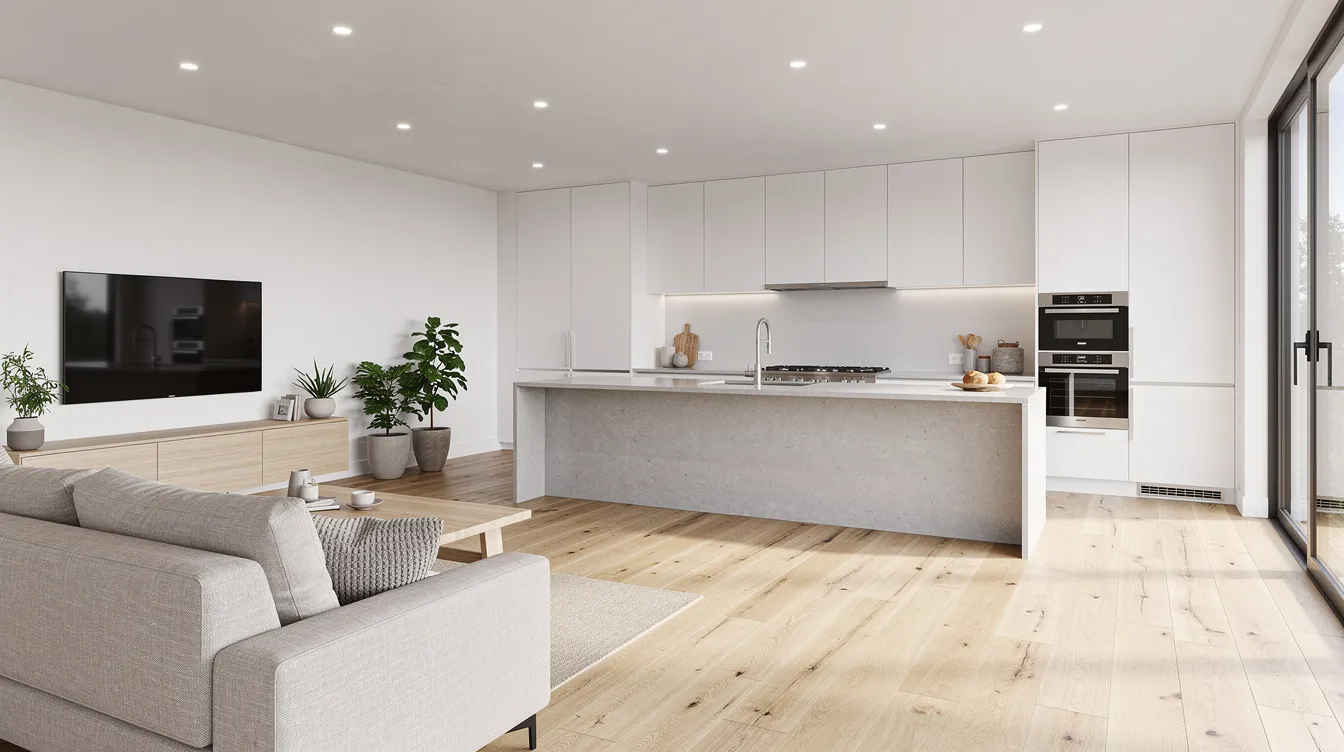
Engineered wood looks and feels like solid timber because you’re walking on a genuine wood surface. Every plank displays natural grain patterns with colour variations that create a completely natural appearance.
-
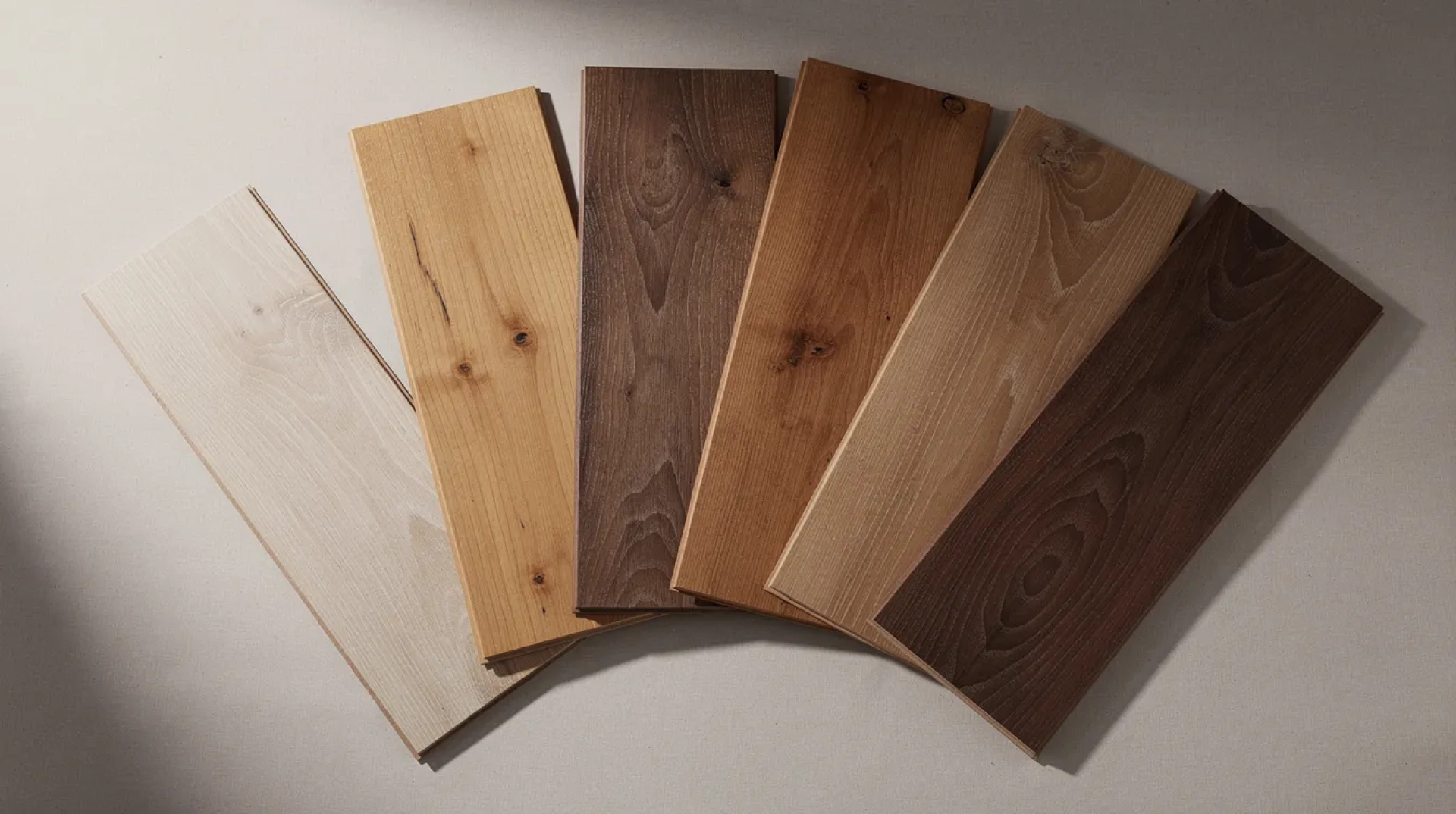
Wood species and tones: Natural European oak offers warm golden tones, American walnut provides rich browns, light ash and maple suit Scandinavian-style interiors, and smoked or fumed oak delivers deeper, more dramatic shades. Contemporary grey-stained finishes are gaining popularity.
-
Grading options: Rustic grades feature visible knots, colour variation, and sapwood for maximum character. Natural/classic grades offer balanced character. Select/prime grades have minimal knots for a cleaner, more uniform appearance.
-
Surface textures: Smooth sanded finishes suit modern spaces. Brushed textures highlight grain. Hand-scraped and sawn-effect finishes add tactile character for a more natural look.
-
Plank formats: Wide planks (up to 220 mm+) create open, contemporary spaces. Narrower planks suit traditional rooms. Herringbone and chevron parquet patterns can be supplied as engineered blocks for period elegance.
Finishes, Care and Maintenance
The combination of hardwood wear layer and surface finish determines day-to-day maintenance and long-term durability. Understanding your finish type is essential for proper care.
Lacquered finishes form a hard protective film over the wood. They offer strong resistance to spills and abrasion, making them durable for high traffic areas like hallways and family kitchens. Maintenance is straightforward: vacuum regularly and damp mop occasionally.
Oiled finishes (hardwax oil or natural oil) soak into the wood for a more natural, matte appearance that highlights grain. Scratches and marks can be locally repaired without refinishing the entire floor. However, these finishes need periodic re-oiling every 1–3 years and require prompt spill cleanup to prevent water marks.
-
Basic cleaning: Use a soft-bristle vacuum or dry microfibre mop. Clean with a well-wrung damp mop only. Avoid steam cleaners and harsh chemicals.
-
Long-term care: Floors with 4–6 mm wear layers can typically be sanded and refinished 2–4 times. Thinner 2–3 mm wear layers may allow one light sanding at most.
-
Prevention: Felt pads under furniture reduce scratches by up to 80%. Entrance mats trap grit. Soft chair castors protect against dents in high-use areas.
Where Engineered Wood Flooring Works Best (and Where It Doesn’t)
Engineered wood is designed for most lived-in areas but still has limitations because of its natural wood surface. Matching the flooring to room conditions is essential.
|
Room Type |
Suitability |
Notes |
|---|---|---|
|
Living rooms, bedrooms |
Excellent |
Ideal conditions for real wood floor |
|
Dining rooms, home offices |
Excellent |
Standard domestic use |
|
Hallways, landings |
Good |
Choose lacquered finish for durability |
|
Kitchens |
Good with care |
Wipe spills quickly |
|
Utility rooms |
Caution |
Check humidity levels |
|
Bathrooms, wet rooms |
Not recommended |
Risk of swelling and damage |
|
Basements |
Possible with preparation |
Requires moisture barriers |
Good-quality engineered boards work well over floor heating systems, with typical maximum surface temperature recommendations around 26–27°C. Heat must be increased gradually when systems are first switched on.
For basements and ground-floor slabs, careful moisture testing, damp-proof membranes, and correct adhesives are essential. In marginal cases, high-quality vinyl or LVT may be safer popular alternatives.
Engineered Wood vs Laminate and Solid Wood
Engineered wood sits between laminate and solid wood in cost, performance, and authenticity. Understanding the key differences helps you choose wisely.
Compared to solid wood:
-
More stable in centrally heated homes
-
Often more affordable (10–30% less)
-
Available in larger widths without extreme movement
-
Easier to install across various subfloors
-
Solid wood offers unlimited sanding potential but demands more maintenance
Compared to laminate:
-
Real timber surface with unique grain on every plank
-
Can be sanded and refinished
-
Laminate is more moisture resistant and scratch-resistant
-
Laminate cannot be refinished and may look less authentic close-up
Typical lifespans:
-
Engineered wood: 20–50+ years depending on quality
-
Laminate: 10–20 years
-
Solid wood: Potentially longer but with greater demands
Consider your budget, room conditions, and expectations for authenticity when deciding between these options.
Choosing the Right Engineered Wood Floor for Your Home
Several technical and design choices affect long-term performance and appearance. Making informed decisions now prevents problems later.
|
Decision |
Options |
When to Choose |
|---|---|---|
|
Board thickness |
12–20 mm |
Thicker for direct fixing; thinner for floating |
|
Wear layer |
2–6 mm |
Thicker allows more refinishing |
|
Core type |
Plywood, softwood, HDF |
Plywood offers superior stability |
|
Installation |
Click-lock, tongue and groove |
Click for DIY; glued for permanence |
-
Match finish to usage: Choose tougher lacquer for high-traffic entrances. Matt or brushed finishes hide minor scratches. Warmer tones suit traditional spaces; pale and grey tones work for contemporary interiors.
-
Check compatibility: Confirm underfloor heating suitability. Review manufacturer warranties (often 15–30 years for domestic use). Read installation instructions before purchase.
-
Prepare for consultation: Gather room measurements, photos, and notes about subfloors and heating so a flooring specialist can recommend the most suitable engineered wood products for your home.