Selecting the right wood flooring for your home involves more decisions than most people expect. From species and finish to board width and installation method, each choice affects how your floor looks, performs, and lasts. This guide walks you through every key decision, with practical UK-focused advice for 2026.
Quick guide: how to choose wood flooring (start here)
Choosing wood flooring doesn’t need to be overwhelming. Here’s a numbered mini-checklist covering the main decisions you’ll face:
-
Set your budget – including fitting, prep, and trims
-
Assess your room and subfloor – concrete, timber, moisture levels
-
Choose solid or engineered – based on stability needs and heating
-
Pick colour and grade – to suit your interior design and light
-
Decide on plank vs parquet – straight boards or decorative patterns
-
Select your finish – lacquered finish, oiled finishes, or textured
-
Confirm installation method – glued directly, click-lock, or nailed
UK price bands for 2026:
|
Category |
Price range (per m²) |
Typical products |
|---|---|---|
|
Budget |
£8–£25 |
Laminate flooring, basic LVT |
|
Mid-range |
£25–£70 |
Engineered oak flooring, standard finishes |
|
Premium |
£70–£200+ |
Solid hardwood, reclaimed flooring, designer parquet |
Which rooms suit which product:
-
Bathrooms and kitchens – LVT, vinyl planks, wood-effect porcelain tiles, or moisture-rated engineered boards with factory-sealed edges
-
Living rooms, dining rooms, and bedrooms – engineered wood flooring or solid wood for warmth and acoustic comfort
-
Hallways – durable engineered with AC4+ wear ratings, parquet flooring for period homes, or hard wearing laminate
If you only remember three things:
-
Choose for the room conditions (humidity, traffic, subfloor type)
-
Invest in the best construction you can afford—quality engineered often outlasts cheap solid in variable UK climates
-
Always request free samples and view them in your space before ordering
Solid wood vs engineered wood: which is right for your home?
Understanding the difference between solid and engineered wood is fundamental to choosing the right wood flooring for your property.
Solid wood flooring consists of a single piece of timber, typically 18–22mm thick, cut from the heartwood. It offers authentic character but can expand and contract significantly—up to 1.5% across the grain—when humidity fluctuates between the 30–70% RH common in UK homes.
Engineered wood flooring features a real wood wear layer (usually 2–6mm) bonded to multiple layers of cross-plied plywood or HDF. This construction limits movement to under 0.2%, making engineered boards far more stable in modern builds with variable conditions.
Key differences at a glance:
-
Stability – Engineered handles humidity swings and underfloor heating better
-
Lifespan – Both can last 50–100 years with proper maintenance
-
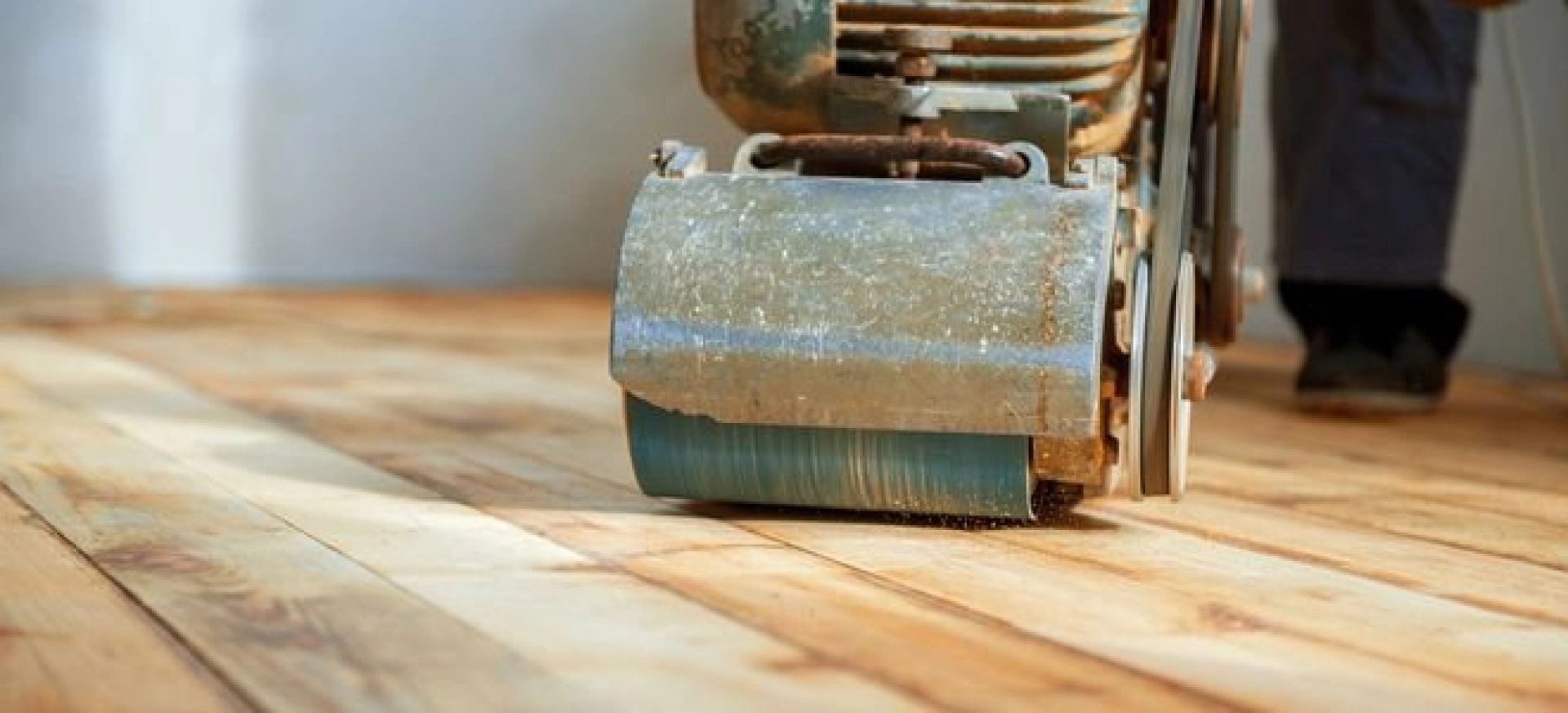
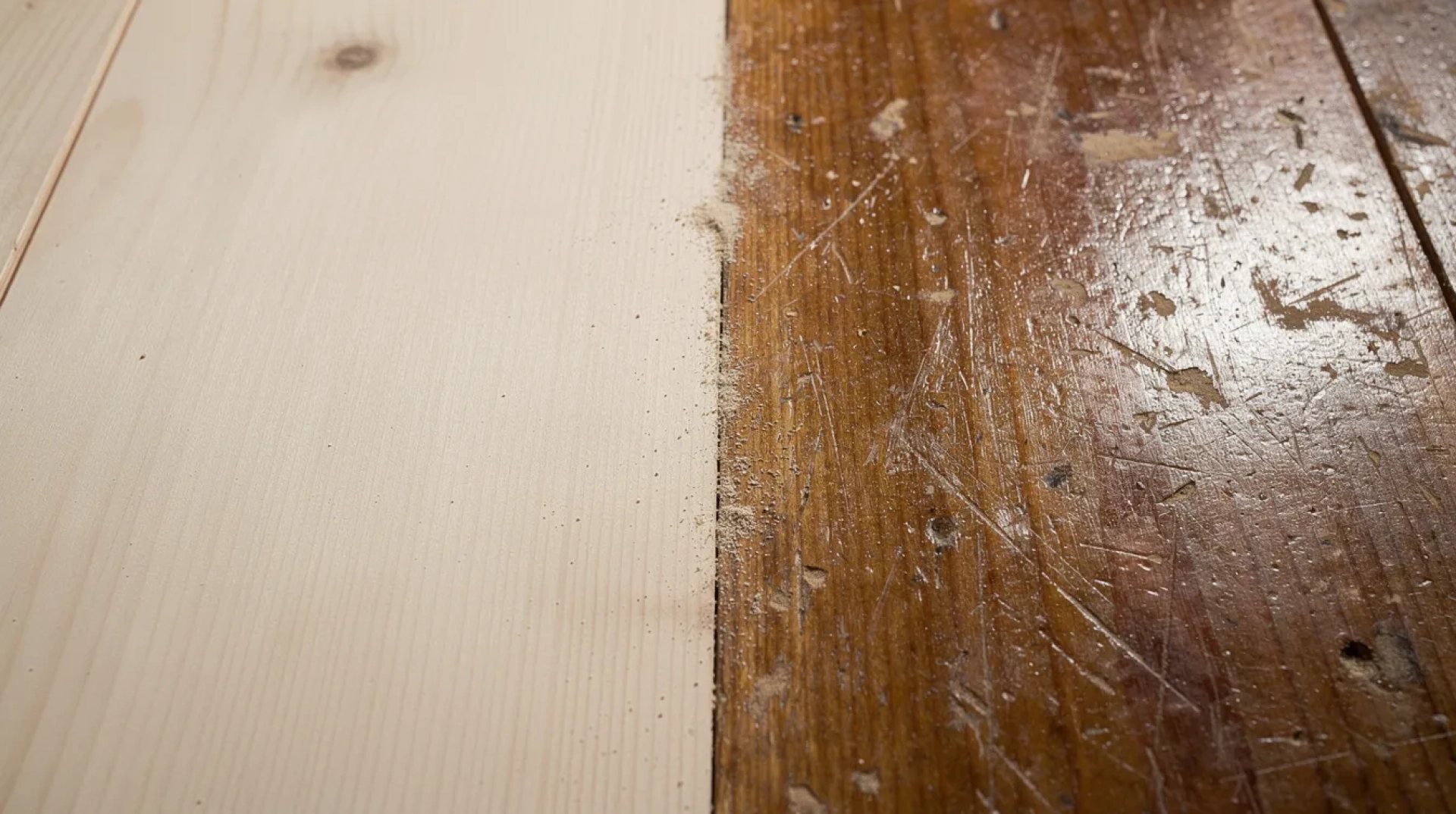
Sanding potential – Solid wood can be sanded 6–10 times; engineered with a 2–3mm top layer allows 1–2 light sands, while 4–6mm wear layers support 3–5 refinishes
-
Subfloor compatibility – Engineered can be glued directly or floated over concrete with a damp-proof membrane; solid typically needs timber joists or battens for airflow
Underfloor heating compatibility:
If you plan to install underfloor heating, quality engineered flooring is usually the safer choice. Most manufacturers cap surface temperatures at 27°C. Solid wood’s full thickness amplifies warping risk from radiant heat cycles, making it generally unsuitable.
Choose solid if:
-
You have a heritage timber-frame home with consistent 40–60% RH
-
The property has stable upper floors with no underfloor heating
-
You want maximum sanding potential over generations
Choose engineered if:
-
You’re renovating a 1930s semi with a concrete kitchen floor
-
You’re installing wet underfloor heating systems
-
You need to lay over concrete or existing hard surfaces
Wood species, grades & colours
Species, grade, and colour determine more than aesthetics—they affect how big and bright your room feels, how hard wearing the floor is, and how well it hides everyday wear.
Common UK species:
-
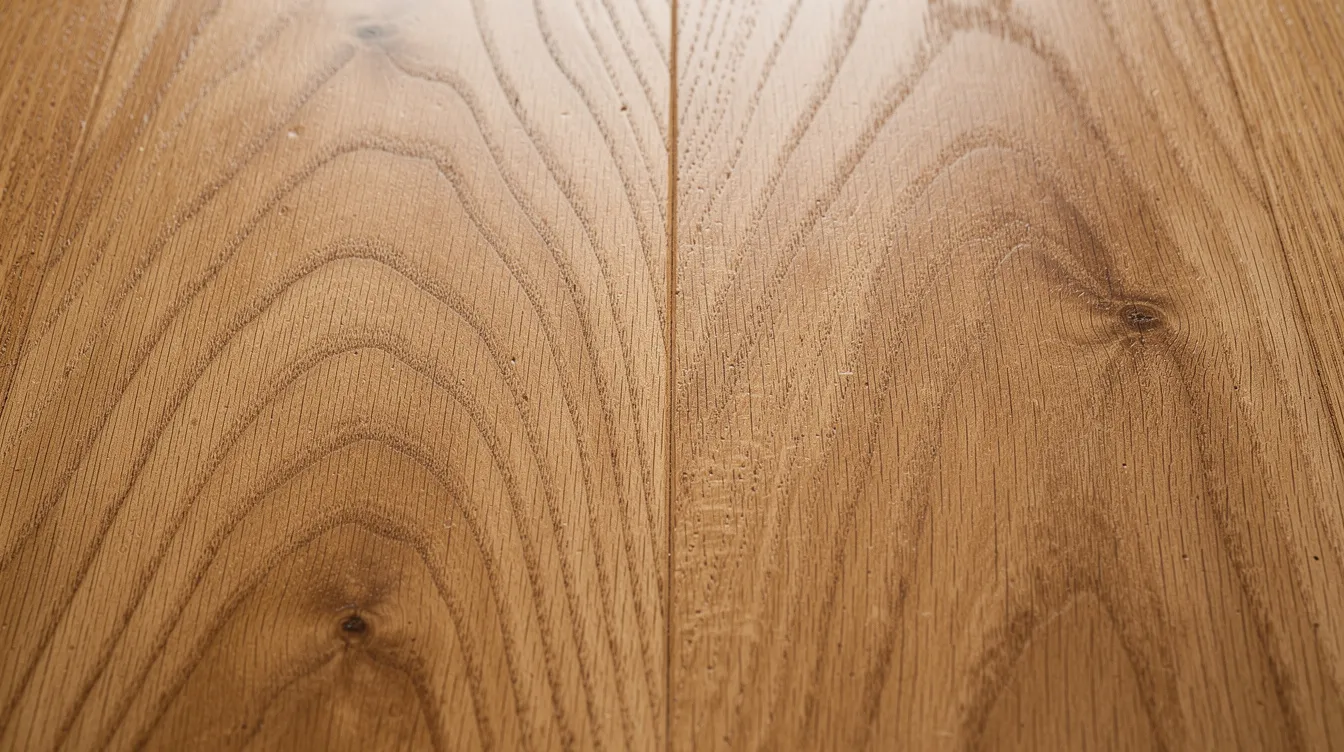
Oak – Versatile and dominant (95% of UK installations), excellent hardness, distinctive cathedral grain
-
Ash – Pale and airy, ideal for brightening north-facing spaces
-
Walnut – Dark and luxurious, softer wood suited to lower-traffic areas like lounges
-
Maple – Light and smooth with a contemporary feel
-
Bamboo – Technically a grass but harder than many hardwoods; an eco-alternative
-
Cork – Soft wood option, resilient underfoot, good for sound absorption
Understanding grades:
|
Grade |
Characteristics |
Best for |
|---|---|---|
|
Prime/Select |
Under 5% knots, uniform colour |
Sleek modern interiors |
|
Natural |
10–30% knots, some sapwood |
Balanced character |
|
Rustic |
Lots of knotting, cracks, sapwood |
Farmhouse and period styles |
Rustic grades are forgiving in family homes where scratches and marks blend into the character, though they may require more subfloor levelling.
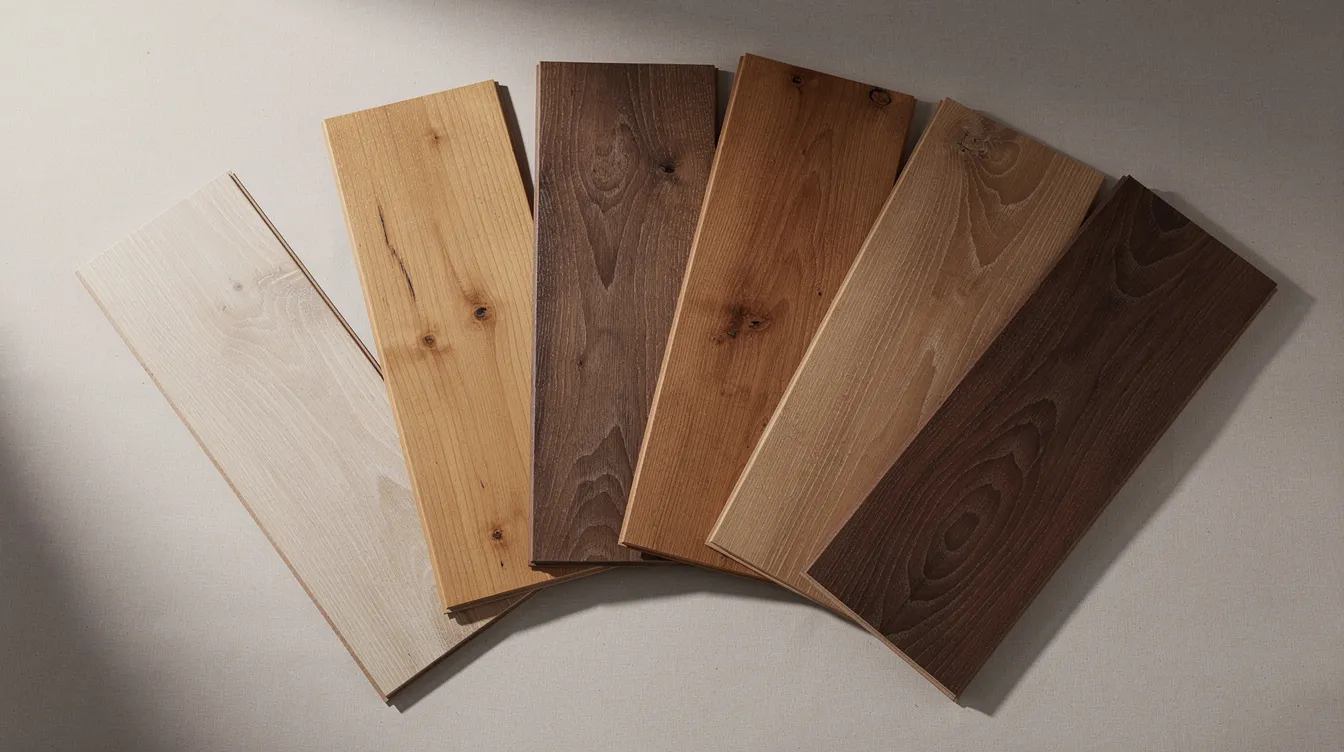
Colour guidance:
-
Light/blonde floors (ash, fumed oak) reflect 70–80% of light, making smaller rooms feel larger
-
Mid-tones (honey oak) hide dust effectively—ideal for homes with pets
-
Darker wood (espresso walnut) creates drama but reveals scratches and dust more readily
Matching to natural light:
North-facing rooms benefit from warm oaks and honey tones that counteract grey daylight. South-facing spaces can handle cooler greys or darker shades without feeling gloomy. Always place actual samples in your room for 24–48 hours to observe how the colour shifts between morning and evening light—natural wood can look 15–25% different under various lighting conditions.
Board format: plank vs parquet, width & length
Board shape and layout have a huge impact on how spacious, calm, or decorative your space feels.
Straight planks:
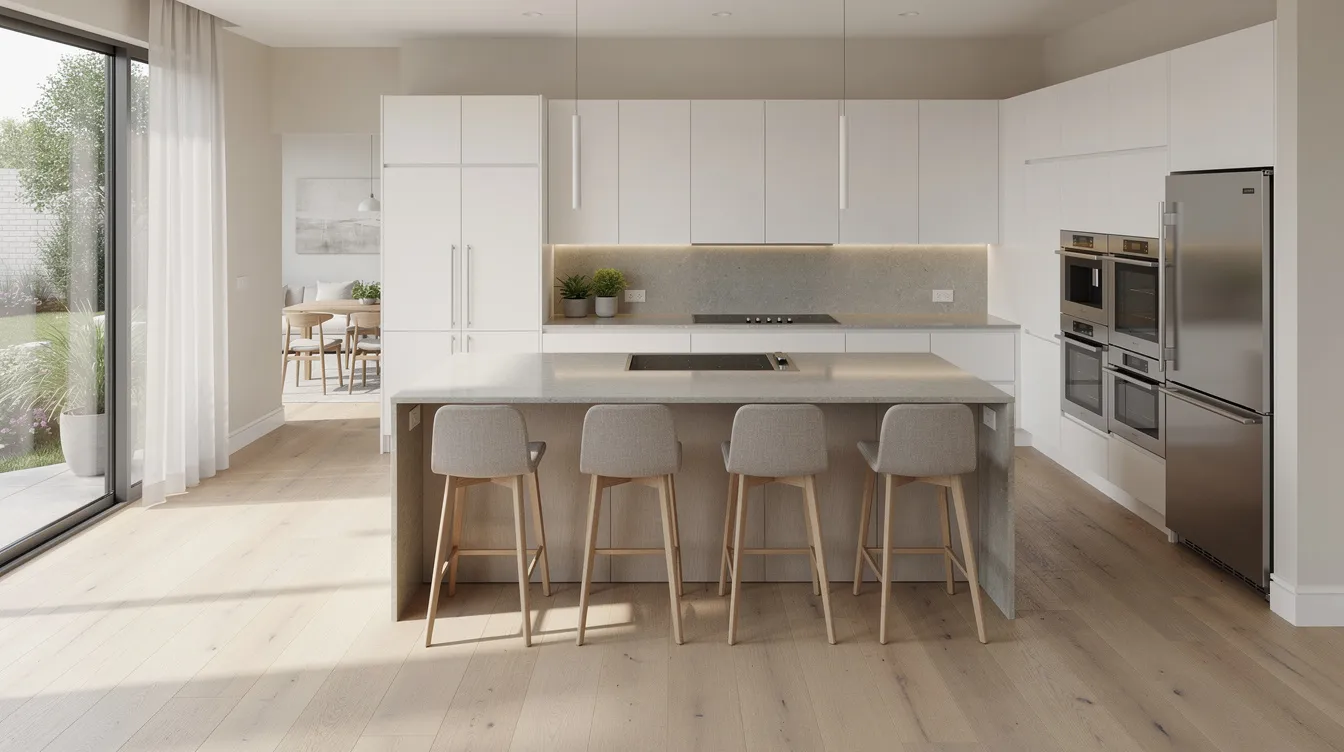
Straight planks represent about 80% of UK installations. They’re typically 20–30% faster to install than parquet, keeping labour costs lower at around £20–30/m². For best visual effect, run planks parallel to the longest wall or along the main light source to elongate the room. For example, wide 220mm oak planks running lengthways through a 6m-long kitchen–diner emphasise the room’s generous proportions and create a sense of flow across the whole floor.
Parquet patterns:
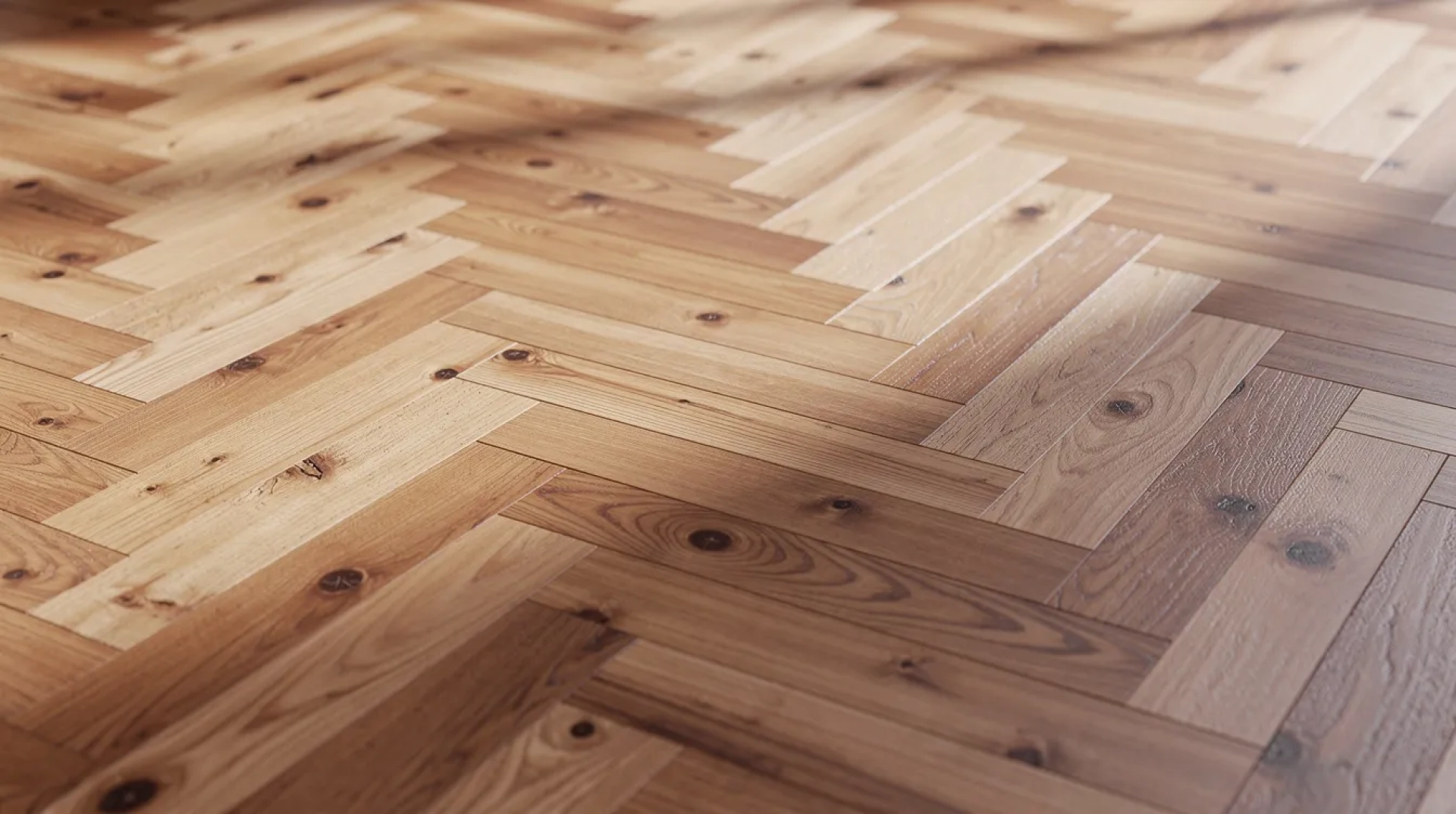
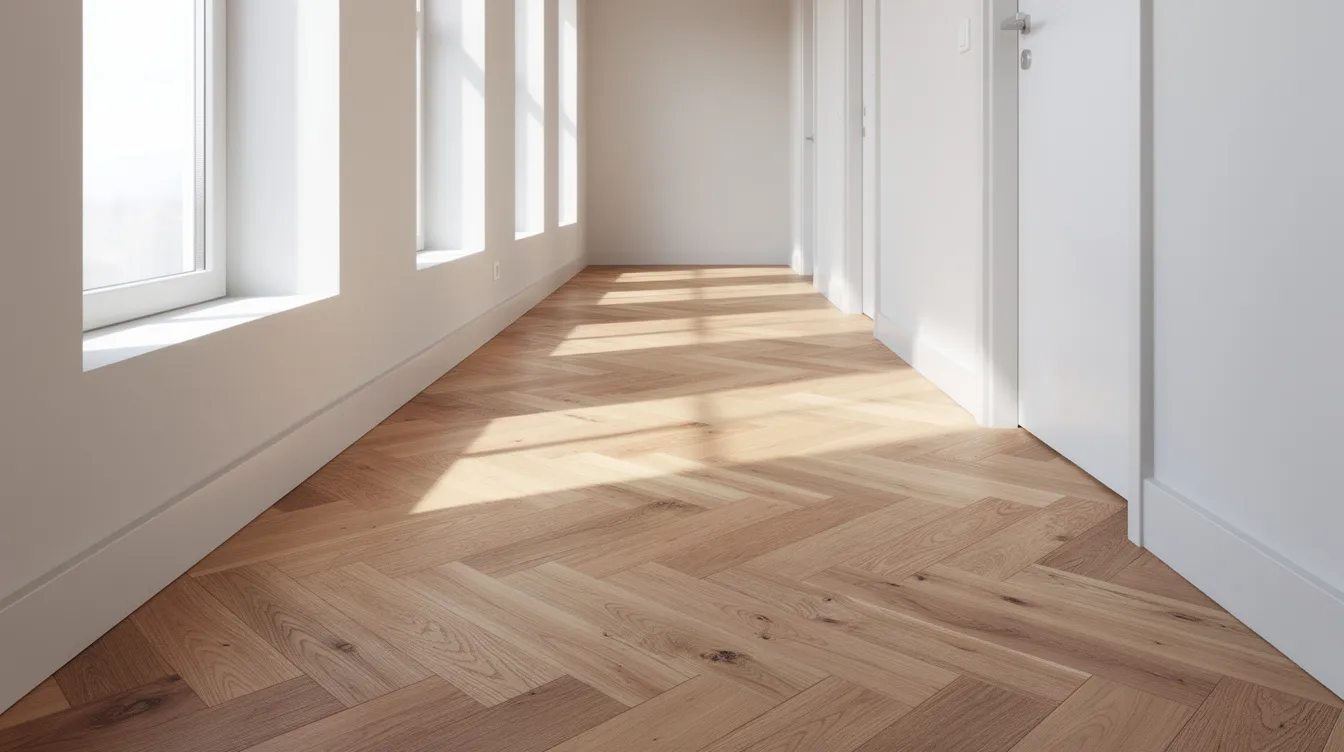
Parquet flooring—herringbone, chevron, Versailles, or mansion weave—adds a decorative element suited to hallways, reception rooms, and period properties. These patterns typically add £40–60/m² in fitting costs due to the labour intensive nature of tight mitres and angled cuts, but can increase perceived property value by 10–15%.
Plank size guidance:
|
Width |
Best suited for |
|---|---|
|
Narrower planks (<120mm) |
Traditional schemes, smaller rooms, period cottages |
|
Standard (140–180mm) |
Most UK semis and terraces |
|
Wider planks (180–260mm+) |
Open-plan living, contemporary interiors |
Wider and longer boards (2–3m lengths) reduce the number of seams, creating a calmer, more spacious look. However, they require flatter subfloors (within 3mm over 2m) and cost more per square metre.
Finishes, textures & maintenance
Your finished floor’s appearance, slip resistance, and repairability all depend on the finish you select. Understanding your options helps you match durability to lifestyle.
Main finish types:
-
Matt lacquer (5–15% gloss) – Dominates UK installations; durable, low-sheen, resists fingerprints effectively, easy to clean
-
Satin lacquer (20–35% gloss) – Adds subtle shine while maintaining practicality
-
Hardwax oil – Penetrates the timber 1–2mm, offering a natural look with patch-repairability
-
UV-cured oil – Factory-hardened for extra toughness, retains an oiled appearance
Textures explained:
-
Smooth/sanded – Works best with gloss finishes, shows scratches more readily
-
Brushed – Wire-brushed to emphasise grain; hides scratches approximately 30% better by creating shadows
-
Distressed/hand-scraped – Suits rustic or reclaimed wood looks; disguises wear in busy family homes
Care guidance:
For any natural wood floor, daily sweeping or vacuuming with a soft brush removes around 90% of damaging grit. Damp mop bi-weekly using a pH-neutral wood floor cleaner (pH 7–8)—never steam clean real wood flooring as moisture penetrates unsealed edges. Use felt pads under furniture and mats at entrances.
Maintenance intervals:
-
Oiled finishes – Re-oil high traffic areas every 1–3 years
-
Lacquered finish – Check every 5–7 years; professional recoat when wear becomes visible
Keep your maintenance products consistent with the original finish to avoid buildup or compatibility issues.
Room-by-room: matching wood flooring to spaces
Temperature swings, humidity, and footfall vary dramatically between rooms, so the right wood flooring for your bathroom differs completely from your loft bedroom.
Living room/lounge:
Engineered or solid wood works beautifully here. Wooden floors absorb sound approximately 20dB better than tile, creating warmth and acoustic comfort perfect for relaxation.
Hallway:
This high traffic area demands durability. Choose hard wearing engineered with AC4+ ratings, decorative parquet, or quality laminate. The protective overlay on laminate makes it particularly resilient against boots and bags.
Kitchen:
Moisture resistance matters. Opt for moisture-rated engineered boards (under 12% MC), LVT, or wood-effect tiles. Allow 15mm expansion gaps per metre and place mats near sinks and dishwashers. Some engineered options with HDF cores handle kitchen conditions well if factory-sealed.
Bathrooms and utility rooms:
Generally, avoid real wood flooring here. LVT or vinyl mimicking teak veins offers the aesthetic without risk. If clients insist on engineered wood, strict moisture control and manufacturer approval are essential—failure rates reach 5–10% in spaces exceeding 70% RH without proper acclimation.
Homes with pets and children:
Select harder species like hickory, textured matt finishes, and mid-tone colours that hide dirt. Consider click-lock systems allowing you to swap individual boards in minutes rather than glued installations requiring professional repair.
Underfloor heating reminder:
Maintain below 60% RH and 27°C maximum surface temperature. Use breathable underlays and adhesives as specified by your flooring manufacturer.
Budget, installation & where to buy
Product price represents only 40–60% of your total spend. Fitting, subfloor preparation, trims, and underlay add significantly to your new floor investment.
Realistic UK cost brackets for 2026:
|
Component |
Cost range |
|---|---|
|
Budget laminate/LVT |
£8–£25/m² |
|
Mid-range engineered oak |
£25–£70/m² |
|
Premium/reclaimed/parquet |
£70–£200+/m² |
|
Professional installation |
£20–£40+/m² |
Installation methods:
-
Tongue-and-groove (glued/nailed) – More permanent, best for professionals, ideal over timber joists
-
Click-lock (floating) – Faster, more DIY-friendly, enables future plank replacement, works over 80% of substrates
Hidden costs to factor in:
-
Subfloor levelling to achieve ±2mm tolerance
-
Damp-proof membranes over older concrete (required below 75% RH)
-
Quality underlay for 15dB impact sound reduction and quieter underfoot performance
-
Matching stair nosings, thresholds, and skirtings
Choosing retailers and fitters:
Look for clear product specifications covering wear layer thickness, core type, grade, finish, and warranty length. Check independent reviews and confirm fitters follow BS 8201 or equivalent installation standards. Established suppliers like a reputable natural wood floor company, Ted Todd, or similar specialists typically provide comprehensive guidance and aftercare.
Whether you’re purchasing engineered wood for a straightforward renovation or sourcing reclaimed wood from salvage yards to give character timber a new lease of life, start by shortlisting options and ordering physical samples. Place them in your room, observe them across different times of day, and speak to a wood flooring specialist who can provide tailored recommendations based on your property, timescale, and budget.
Your next project deserves flooring that performs as well as it looks—take the time to choose wisely, and you’ll enjoy the results for decades.