WOOD STABILITY
Why is it that a wood floor from one manufacturer is of low quality, bends and runs unevenly, while a parquet from another manufacturer is stable and has minimal dimensional variation? This is because one manufacturer and the other have a different approach to production. The former produces quickly and compensates for any complaints with turnover, while the latter respects the wood. In a nutshell, it is as follows. In order to achieve good stability, the wood must be seasoned, i.e. it must have enough time to naturally remove some of the moisture. Both stages are very expensive and take a long time, which is why they shape the price, but also the wood parquet with the highest stability. The effect of such processes can be found in our wooden floors, especially in the collections:
LUXURY CLASSIC SOLID FOR UNDERFLOOR HEATING and PARQUETRY DESIGNS
The wood flooring in the above collections is characterised by the highest stability and most of them are solid hardwood floors like European Oak and European Ash, which are characterised by above-average stability and have been installed for years on underfloor heating.
CALIBRATION
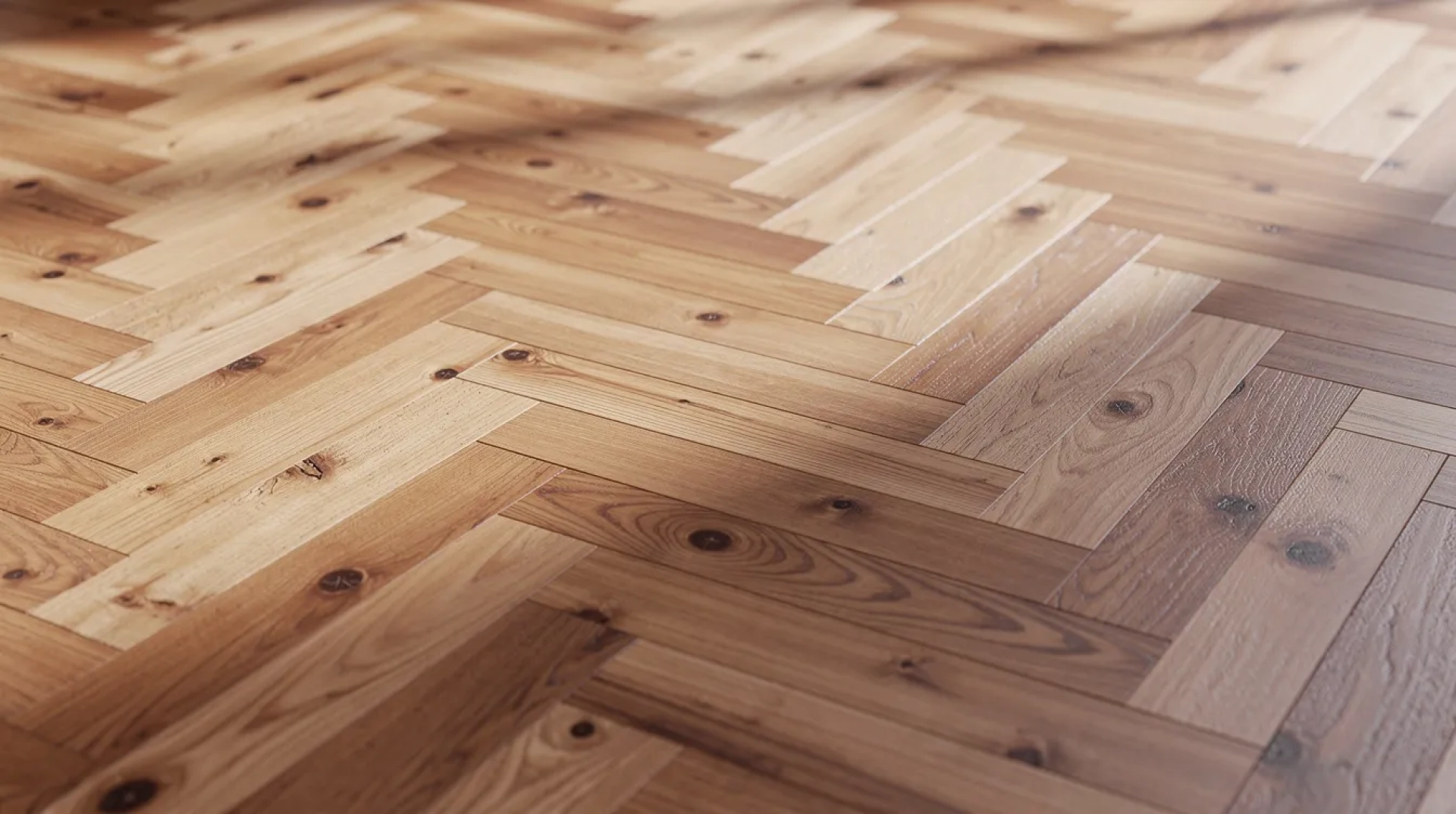
Both the small factories and the large production lines rely on equipment that ensures the precision of the wood flooring, but also the correct shaping of the joints to allow comfortable working. All these elements are taken into account before production begins. Our floors are produced in two different ways. If we consider small elements, we mean the classic herringbone and chevron parquets or long planks, then these are repetitive elements, usually unfinished, and their precision is very important. This is why they are made on a production line as it ensures high precision cutting, and then the produced wood floors are characterised by repeatability of dimensions and uniform quality.
On the other hand, there is a large group of customers for whom the unique character of wood is connected with unique production methods. Our inlay parquets in the form of panels are made by hand and have a non-repeatable character. Ranging from simple geometric patterns to more natural ones featuring all kinds of rounded shapes known as marquetry, they are cut by hand and subsequently assembled. This requires extraordinary tool skills and an understanding of the material wood. The result is a unique panelled parquet.
FINISHING
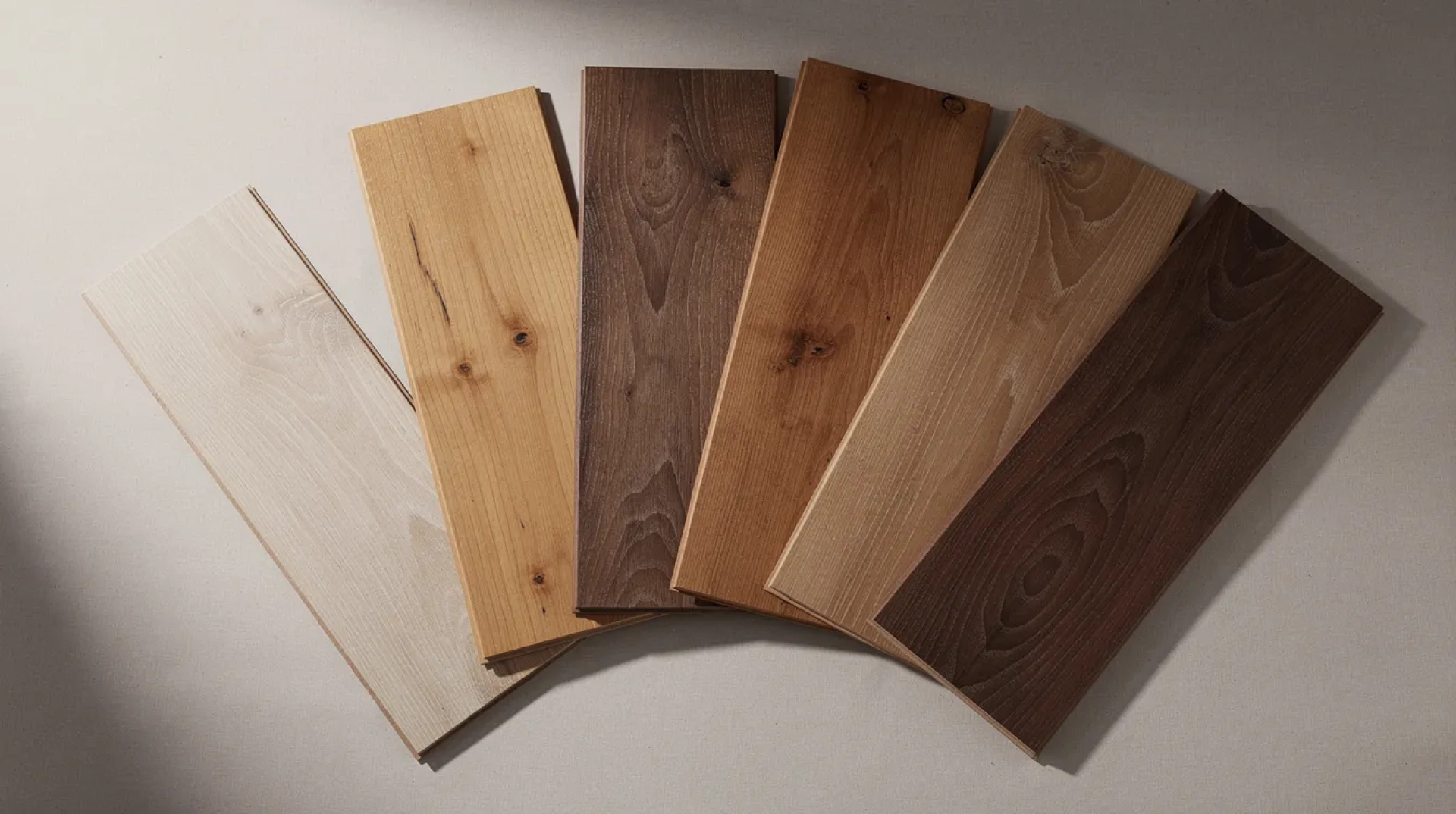
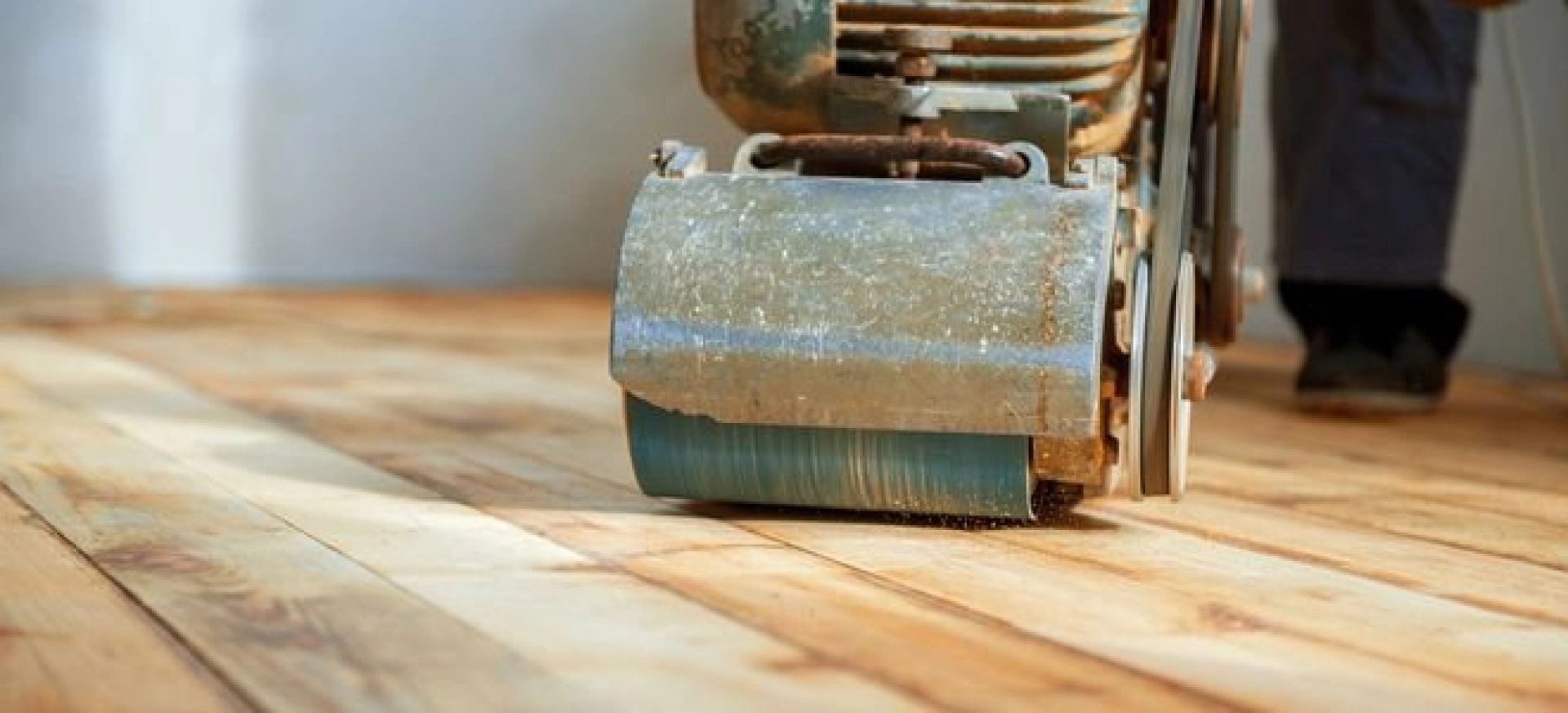
Finishing wood floors is the final phase of production and one of the most important, as it affects the appearance of the top surface as well as the quality of the final product. Usually, several layers of finishing are applied in intensive production, which sounds great in marketing, but a measurable indicator is the level of oil, varnish or other finishes applied in ranges per square metre of wooden floor. 7 BRACI offers, among other things, hand-finished & tailored wood floors. When we hand-finish a surface, we first age or sand the surface of the planks or staves to achieve a smooth surface and then start the finishing process. We often apply three times as many finishing coats compared to floors produced on the production line. There are many methods and measures on our table, and one of the most desired is the process in which we first protect the wood, then we expose its deep shade and grain and in the next step we apply colouring products that change the character of the wood, and finally, depending on the technology used, a single or double layer of conservation treatment. We also use wood smoking, heat treatment reaction stains and many other methods that give character to the wood floor. Based on many years of experience of working and experimenting with wood, we have collected several finishes into a collection of products. It is worth noting that practically any finish or colour can be applied to both solid and engineered wood in any pattern. Please review BOUTIQUE handcrafted wood flooring collection here
We are often asked what type of flooring will suit my home, and the answer in most cases comes from an understanding of the above. However, the species of wood, the colour of the finish and the pattern of the floor are decided at the consultation stage, because these aspects strongly correspond to the character of the building or the premises, and sometimes the personal preferences of the client predispose us to create new and innovative solutions in which we feel very freely. However, our guiding principle is quality.
A floor perfectly suited to the UK climate?
We’ll recommend species and technologies that stay stable and beautiful despite temperature and humidity changes.
Enquire About Custom Sizes